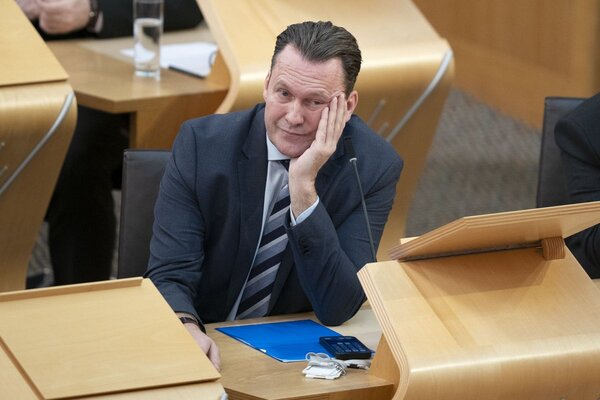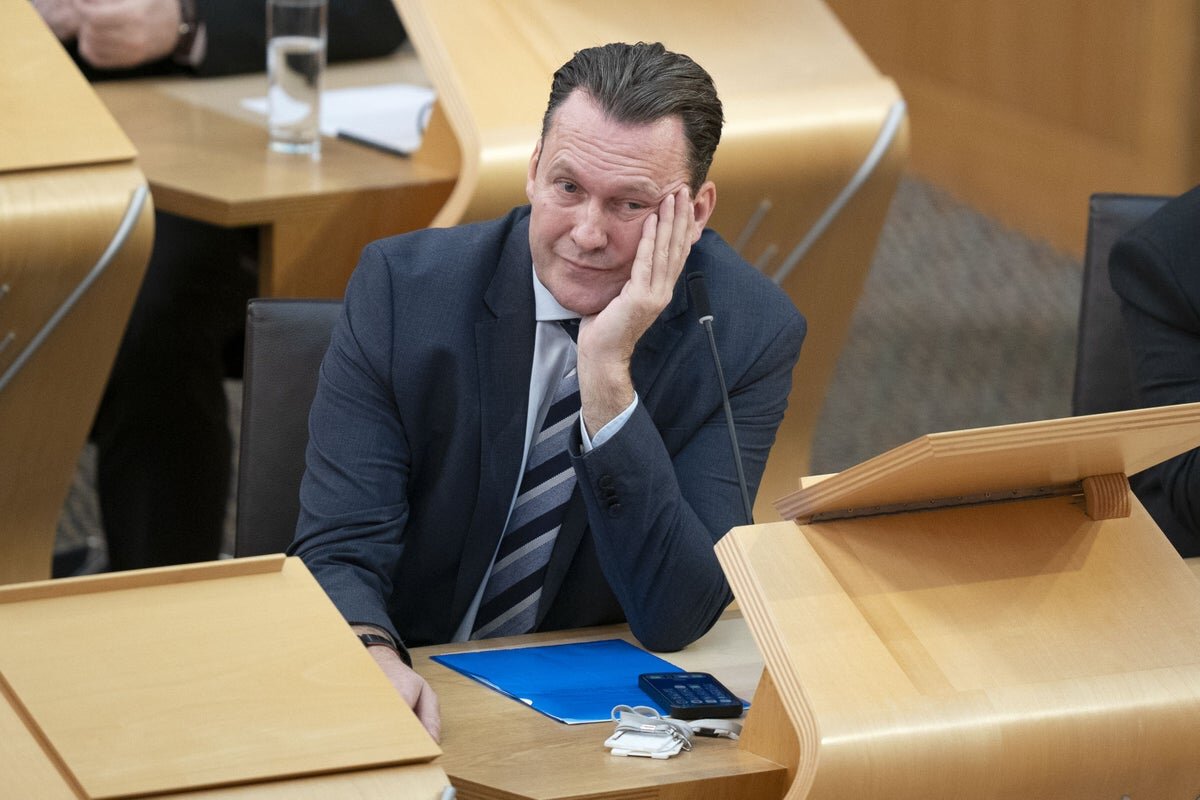
Scotland’s First Minister, John Swinney, has come under pressure following the unveiling of the 2026–27 Scottish Budget, which included minor income tax reductions for lower earners and a freeze on higher tax thresholds.
The budget, announced at Holyrood in January, prompted sharp political debate: opposition leaders questioned its impact on workers and the wider Scottish economy, while the government argued the measures support public services and address poverty.
Tax Changes and Political Reaction
The Scottish Budget introduced a rise in the thresholds for basic and intermediate income tax bands, offering a modest reduction in tax for some earners.
According to official figures, the maximum saving for these individuals will be around £31.75 a year, equal to approximately 61 pence per week. Scottish Conservative Leader Russell Findlay described the changes as “miserly” and “insulting”, claiming they are insufficient to support Scotland’s working population.
During First Minister’s Questions, Findlay suggested the government’s adviser had described the reduction as “possibly the smallest tax cut in history”.
Impact on Lower Earners
Critics argued that the limited scale of tax savings would do little to alleviate cost-of-living pressures for many Scottish households. Findlay questioned whether such a minimal cut would have any meaningful effect, stating, “This would not buy a bag of peanuts.”
At the same time, the Scottish Government’s freeze on higher tax thresholds means more higher earners are expected to move into elevated tax brackets over time. The Conservatives accused the government of using these additional revenues to cover increases in welfare expenditure.
Debate Over Benefits Spending
In response to criticism regarding social security spending, Findlay asserted that Scotland’s benefits bill was “out of control” and “unaffordable”. He contended that the budget in its current form could not be supported by the Scottish Conservatives,
arguing that it prioritised benefit expansion over relief for workers and businesses. Swinney defended the policy, highlighting that welfare measures such as the Scottish Child Payment were keeping children out of poverty. He stated that a “range of measures” within the budget built on existing support for vulnerable groups.
Labour’s Response to Budget Measures
Scottish Labour leader Anas Sarwar also challenged Swinney in Parliament, arguing that the budget “lacks ambition for Scotland”.
Sarwar claimed that, whilst the government promoted a £6 annual tax cut for the lowest-paid, around one million Scots, including nurses, teachers, and police officers, could pay more tax under the new measures.
Sarwar stated, “Even his own tax adviser says this is a political stunt. Why does John Swinney believe that someone earning £33,500 has the broadest shoulders and should pay more tax in Scotland?”
Government Defence and Tax Comparisons
Swinney maintained that the budget reflected the priorities of Scottish people, promising increased support for the NHS and other public services, while helping mitigate cost-of-living challenges.
He emphasised projections indicating that in 2026-27, 55 per cent of Scottish taxpayers would pay less income tax compared to similar earners in England. The First Minister highlighted that public sector workers in Scotland, such as band six nurses and entry-level qualified teachers, would receive higher take-home pay than their counterparts elsewhere in the UK.
Swinney said, “A band six nurse at the bottom of the scale will take home an additional £1,994 after tax compared to the same band in England.
A qualified teacher at the bottom of the band will take home £6,365 more after tax in Scotland than the equivalent in England.” These figures are based on official salary and tax data at time of writing.
Final Summary
The debate over the Scottish Budget’s tax changes reflects longstanding differences over the nation’s approach to income taxation, public spending, and support for the most vulnerable.
With May’s Holyrood elections approaching, opinion polls suggest the Scottish National Party remains in a strong position, but the direction and effectiveness of fiscal policy continue to be central issues.
As controversy continues, both supporters and critics of the budget are watching closely to see how these tax and spending measures affect household finances, public sector pay, and the broader economy. For readers seeking a clearer view of the evolving tax landscape, tools like the Pie app can help track personal tax changes and projections.