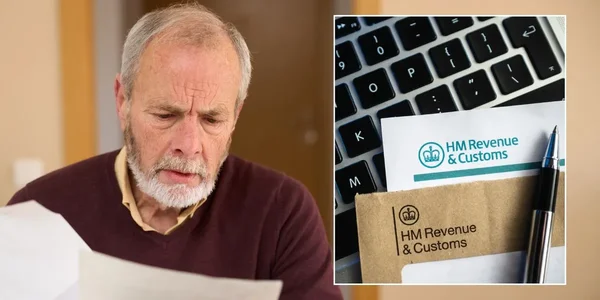
More than 300,000 workers and pensioners in the United Kingdom have received small-value tax bills, according to recently released data. HM Revenue and Customs (HMRC) issued 1.32 million “simple assessments” in the 2023-2024 tax year, setting a new record and doubling the figure compared to previous years.
Nearly half of these bills were for amounts of £300 or less. The sharp increase is attributed to frozen income tax thresholds, resulting in more pensioners and low-income earners entering the tax system. The move to issue such assessments has prompted debate over the efficiency and fairness of HMRC’s collection methods.
Sharp rise in simple assessments
HMRC’s use of simple assessments increased markedly in 2023-2024, according to official figures. The total of 1.32 million notices represents roughly twice the yearly average over the past six years.
Simple assessments allow HMRC to collect tax without requiring a full self-assessment return, especially from employees and pensioners who have underpaid tax in the previous year.
Recently, 24 percent of these assessments demanded £100 or less, while 49 percent required payments of £300 or less. This trend means a significant number of the tax bills issued by HMRC during this period were for relatively minor amounts.
Many face low-value tax bills
A simple assessment is typically sent when HMRC believes it has enough information to reasonably calculate underpaid tax. Its use aims to streamline tax collection for cases where individual returns are not warranted.
However, the increase in small-value demands has raised questions regarding the proportionate costs and administrative effort involved.Experts have expressed concern that processing these low-value assessments may come at a financial and administrative cost, potentially outweighing the benefits of recovering such modest sums.
Policy background and recent changes
HMRC has a statutory obligation to collect all tax due to the Exchequer. Existing policies require the agency to pursue balances owed, regardless of their value.
Income tax thresholds were frozen in 2022, a decision first made under the previous government and recently extended until 2031. The freeze in thresholds has led to more low-income pensioners being drawn into the tax system,
as increases in pensions or other modest income sources now tip individuals above the personal allowance threshold. In the 2023 Autumn Statement, Chancellor Rachel Reeves confirmed that from April 2027, retirees whose sole income is the state pension will not be required to pay small amounts of tax via simple assessment.
Impact on pensioners and taxpayers
The growing use of simple assessments has particularly affected pensioners, many of whom are being landed with unexpected tax bills. A large proportion of recipients assumed their total income remained below the £12,570 personal allowance.
As a result, these assessments can come as an unwelcome surprise, with the process described as both confusing and time-consuming for those unaccustomed to filing tax information.
Organisations including the pension consultancy LCP have warned that the number of simple assessments issued is likely to continue rising, with forecasts suggesting as many as two million people could be affected in the 2024-2025 tax year.
Expert views on administrative burden
Industry professionals have raised concerns about the administrative burden imposed by the current approach. Steve Webb, partner at LCP and former pensions minister, stated that many tax demands are for such trivial sums that costs “probably exceed the tax raised”.
He called for the government to reconsider whether the associated bureaucracy serves taxpayers or represents an inefficient use of resources. Ian Futcher, of Quilter, noted the phenomenon of “fiscal drag”, where frozen thresholds combined with rising incomes lead more people to stray into taxable territory by relatively small amounts.
Futcher stressed that many of those now receiving assessments do not view themselves as typical taxpayers, and the process can be both shocking and inconvenient.
Final Summary
The significant rise in HMRC simple assessments in 2023-2024 has resulted in hundreds of thousands of workers and pensioners facing tax demands for modest amounts. The main cause is the freeze in income tax thresholds, which has brought more low-income individuals, especially pensioners, into the tax net.
This has led to debates about whether collecting such small sums is an effective use of resources. The government maintains its commitment to fair tax collection and highlights the support given to pensioners through the triple lock policy.
As simple assessments are expected to increase further, impacted individuals may seek guidance and tracking for future tax requirements via platforms such as Pie.